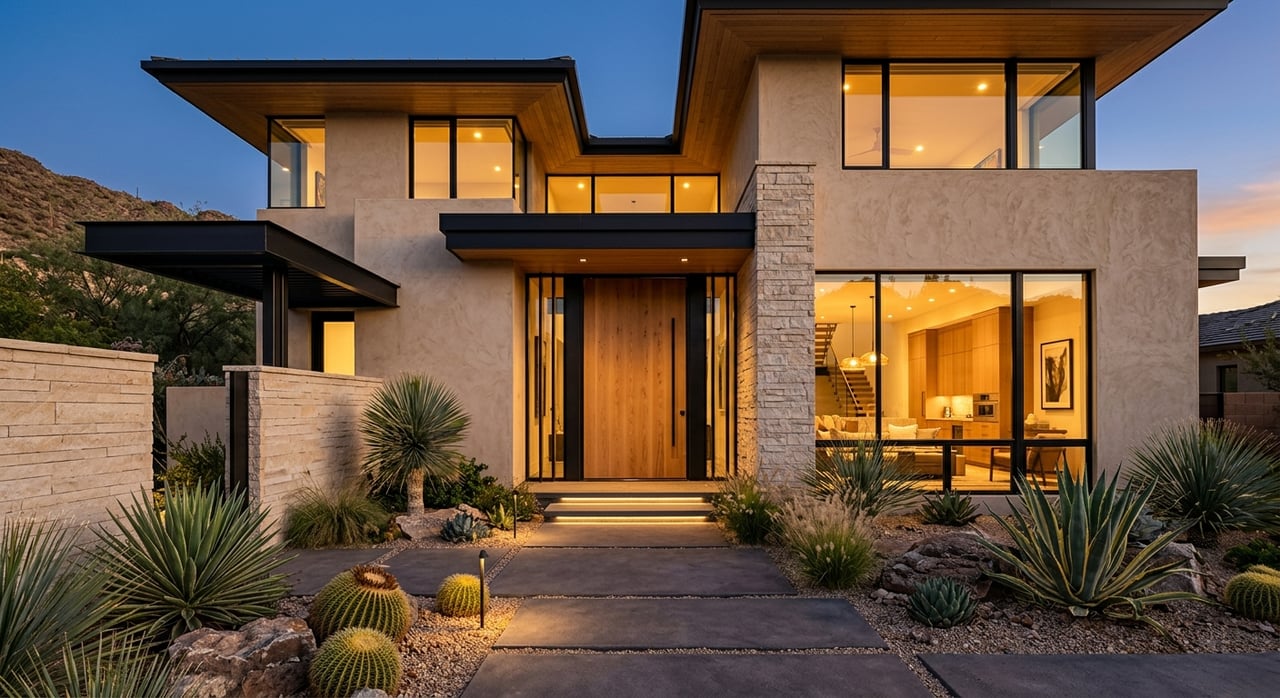
What to Know About Phoenix Luxury New Construction Homes
June 18, 2026
June 18, 2026
Buying luxury new construction in Phoenix can feel exciting right up until the details start piling up. A stunning floor plan and beautiful finishes are only part of the story, because in Phoenix, the lot, the approval path, and the paperwork can shape your timeline and your costs just as much as the design itself. If you are considering a custom estate, a builder spec home, or a residence in a larger community, this guide will help you understand the questions to ask before you commit. Let’s dive in.
In Phoenix, “luxury” is not a formal building category. In practical terms, high-end new construction usually falls into three groups: custom homes on infill or hillside lots, builder spec homes on individual lots, and homes in subdivision or master-planned settings.
That distinction matters because the City of Phoenix handles custom residences, standard residences, and residential subdivisions through different review paths. Residential work now moves through SHAPE PHX, the city’s platform for plan review, permitting, inspections, planning and zoning, and historic preservation.
Before you fall in love with the home design, you need to understand the lot. In Phoenix, the lot can affect everything from feasibility to timing to the type of city review required.
An infill lot can bring extra steps. Depending on the site, the city may need to review zoning, lot splits or combinations, right-of-way issues, grading, drainage, and in some cases historic preservation.
If rezoning is needed, timing can change quickly. The City of Phoenix says a rezoning process generally takes about 3.5 to 6 months from application to final City Council action.
Hillside properties add another layer. Phoenix reviews hillside plans for properties in a hillside development area, which the city defines as a site with a 10% or greater slope, and hillside or grading approval may be required before a building permit is issued.
Historic status can matter too. For properties on the Phoenix Historic Property Register, exterior work, including infill construction, can require a Certificate of No Effect or Certificate of Appropriateness.
Not all luxury new builds follow the same path. Knowing whether a property is custom, spec, or part of a standard-plan subdivision can help you set realistic expectations.
For a custom residence, Phoenix requires a plan submittal with two sets of plans and calculations plus a plot plan. City staff reviews the plans for code compliance, design review, and any site-plan conditions before issuing a building permit.
This path can offer more design flexibility, but it often comes with more moving parts. That is especially true when the lot has grading, drainage, hillside, access, or historic considerations.
For standard residences, the city reviews the standard plan once. After that, lot-specific permits can be issued for individual parcels using the approved plan.
For you as a buyer, that often means a more repeatable process if you are buying within a larger community. Even so, community documents, lot conditions, and final build timing still deserve close attention.
A spec home often sits somewhere in between. The home may already be planned or under construction, which can shorten decision time, but you still want to confirm the permit status, inspection progress, and expected completion steps.
Luxury new construction in Phoenix is permit-heavy and inspection-heavy. The city requires construction permits for new homes, and all permitted residential jobs require inspections.
The inspection schedule is also more structured than many buyers expect. Phoenix inspection milestones typically occur before concrete is poured, after framing, before insulation and drywall, and again at final.
There may also be civil inspections tied to site work. These can include street work, curb cuts, sidewalks, and new utility services.
One key milestone deserves special attention: the Certificate of Occupancy. The city states that this certifies the building complies with applicable codes and is suitable and safe for occupancy, so it is an important item to verify before move-in.
For many luxury properties, the biggest timeline variable is not the house itself. It is the site.
Phoenix requires grading and drainage review for all construction projects. The city’s site-development process can also involve easements, right-of-way, plats, lot splits, stormwater controls, dedications, and landscape review.
That matters most on distinctive parcels, especially hillside and infill lots. A beautiful site can be a major advantage, but it can also require more approvals before the project reaches the finish line.
National data reported an average single-family home build time of 10.1 months in 2023. In Phoenix, a luxury project may take longer if the lot needs rezoning, hillside review, grading and drainage approval, historic review, or utility-related approvals first.
Luxury new construction should be approached with the same care as any major investment, and often more. In Phoenix, buyer due diligence should focus on the lot, the builder, the contract, and the rules around the property.
For a new home in a subdivision, Arizona law requires that you receive the ADRE Public Report before signing the purchase contract. The report is intended to cover essentials such as utilities, streets, roads and drainage, common areas, subdivision restrictions, and other project details.
ADRE also advises buyers to verify facts before signing anything. That makes the Public Report an important part of your review, not just another document in the stack.
Community rules can affect daily use of the property. ADRE notes that CC&Rs may restrict landscaping, RV parking, play equipment, satellite antennas, and similar items.
It is also smart to check adjacent land uses, school district information, future freeway plans, and any taxes or assessments that apply to the community. Those details may shape how the property fits your goals over time.
Builder vetting should include a contractor license check. The Arizona Registrar of Contractors says it licenses and regulates more than 60,000 contractors and reminds consumers that anyone can pretend to be a contractor.
You should also confirm that the license classification matches the work being performed. That simple step can help you avoid unnecessary risk.
A new home is still a home under construction. The Arizona State Board of Technical Registration describes a home inspection as a visual evaluation of visible systems and structure, typically done before finalization to help spot deficiencies.
That is different from the city’s code inspections. In other words, municipal inspections do not replace a private inspector working for you.
New-construction contracts deserve careful review. ADRE advises buyers to read the purchase contract closely, including where earnest money is held, and notes that if earnest money is not placed in escrow, the purchaser must initial a separate paragraph.
For custom-build or land-focused purchases, ADRE also recommends reviewing legal access and water-supply information carefully. If the property is not served in the same way as a typical subdivision lot, those questions become even more important.
The purchase price is only one part of the financial picture. With luxury new construction in Phoenix, financing structure, water-related costs, and future property taxes can all affect the final economics.
Construction financing is not the same as a standard resale mortgage. Construction loans are usually short-term, often have higher rates than longer-term mortgages, and fund the build in stages.
Some construction loans convert to a permanent mortgage, while others require a new application at the end of the build. Construction-to-permanent financing may be structured as a single closing or a two-closing process, and each option has tradeoffs.
Water is a real planning issue in Phoenix, especially for new development. The city says it has a 100-year assured water supply, with supplies drawn primarily from Salt and Verde River water through SRP and Colorado River water through CAP, with groundwater and reclaimed water also part of the mix.
The city also says water-resource acquisition fees are assessed to new development. That means water is not just a background topic. It can be part of the project budget.
Property taxes can shift once the home is completed. Maricopa County notes that the Assessor values property annually, new construction is added to the tax rolls, and permitted construction can affect the limited property value used for taxes.
That is worth factoring into your long-term ownership costs, particularly when you are comparing a new build with an existing luxury resale.
In a luxury new-construction purchase, you are not only choosing a home. You are also navigating builder documents, city approvals, inspection milestones, and timing issues that can affect your investment.
ADRE reminds buyers that a seller’s broker does not represent them in a resale transaction and that they may want a buyer’s broker. In the new-construction setting, that independent guidance can be especially valuable.
An experienced agent can help you compare custom versus spec opportunities, review the lot’s practical constraints, keep track of permit and inspection milestones, and help you stay organized around contracts, disclosures, and closing steps. For Phoenix luxury buyers, that kind of steady, informed support can make the process feel far more manageable.
If you are considering luxury new construction in Phoenix, working with a local expert who understands both the market and the process can save time and help you make more confident decisions. To start the conversation, connect with Sue Shapiro.
Stay up to date on the latest trends in real estate.
Get assistance in determining current property value, crafting a competitive offer, writing and negotiating a contract, and much more. Contact her today.