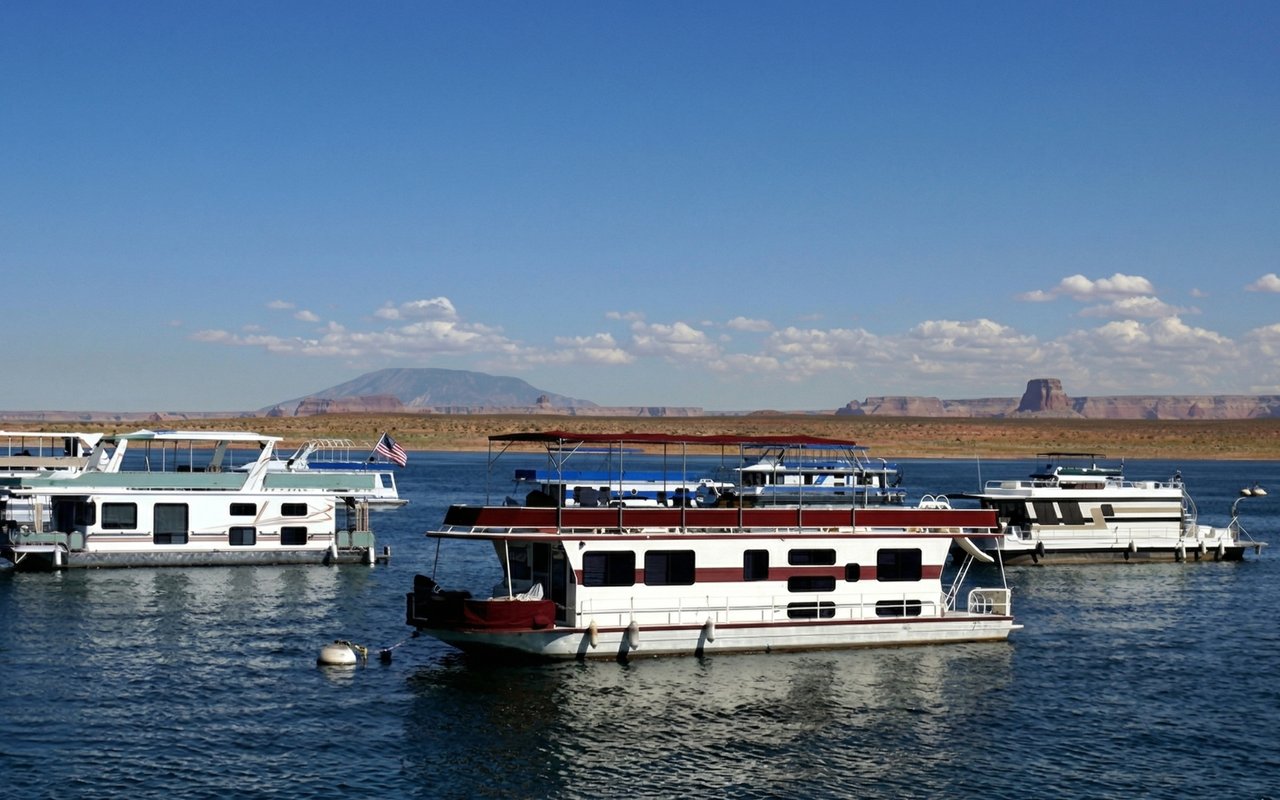
Thinking of Buying a Houseboat?
Sue Shapiro June 3, 2024
Sue Shapiro June 3, 2024
You aren’t the first person to be enthralled with the notion of drifting off to the sound of rippling water, being greeted by a pelican’s splash as it plunges into the sea for its breakfast, and fishing from your living room window. All of this, and more, is a dream come true when you purchase a floating home or a houseboat.
Although “floating homes” has become a catch-all term that includes houseboats, there are differences. Houseboats can leave the dock under their own power, whereas floating homes, since they are built on a “floating apparatus,” cannot.
In fact, according to the U.S. Coast Guard, a houseboat “must have seaworthy hulls, engines and navigational equipment,” among other official specifications.
To avoid confusion, though, we, like owners of water homes, will refer to both as houseboats.
Aside from the obvious advantages of living on a houseboat, others are sometimes regionally dependent. In some areas, you won’t have to pay property taxes because houseboats aren’t considered real estate. When houseboats are considered personal property, much like other boats, you may be asked to pay personal property tax. Then there are the regions that differentiate between houseboats and floating homes and tax the owner accordingly.
If you’ve taken out a loan for your houseboat, and it qualifies as a first or second home (with cooking facilities, a bed, and a toilet), the interest on that loan is tax-deductible.
Living on a houseboat is a bit like condo living in that there are no exterior maintenance chores. No lawn-mowing, no leaf-raking, and no pool-cleaning.
Most houseboat owners agree that the unobstructed water view that nobody can build and block is the biggest plus of houseboat living.
OK, so you escape having to hire a gardener and a pool maintenance company, and you may save on your taxes, but houseboat living brings with it a slew of other financial considerations.
Depending on where you live, you may pay mooring fees, HOA fees, and homeowner’s insurance (which is more costly for a houseboat than a home on land).
Securing financing for your houseboat may be challenging, depending on where you live. Then, lenders differentiate between floating homes and houseboats, with the latter treated as a recreational vehicle (since it is movable) and the former as a home, so you’ll be taking out a mortgage.
These loans are more expensive as well, according to Polyana da Costa with Bankrate.com. “Expect to pay 1 to 2 percentage points more for a mortgage on a floating home than on a loan for a house on land. For houseboats, it's more likely you'll pay 3 percentage points more,” she says.
Finally, the home inspection process is entirely different than the inspection of a land-based home. For instance, the inspector will need to complete a marine survey, inspecting the hull and the interior of the houseboat. The dive part of the survey can get expensive.
Life on a houseboat is definitely different than living on land in a traditional home, and it may take some time to adjust to it. Once you do, however, your fellow houseboat owners agree that you’ll never regret the decision.
Stay up to date on the latest trends in real estate.






Get assistance in determining current property value, crafting a competitive offer, writing and negotiating a contract, and much more. Contact her today.